Sue Bamford
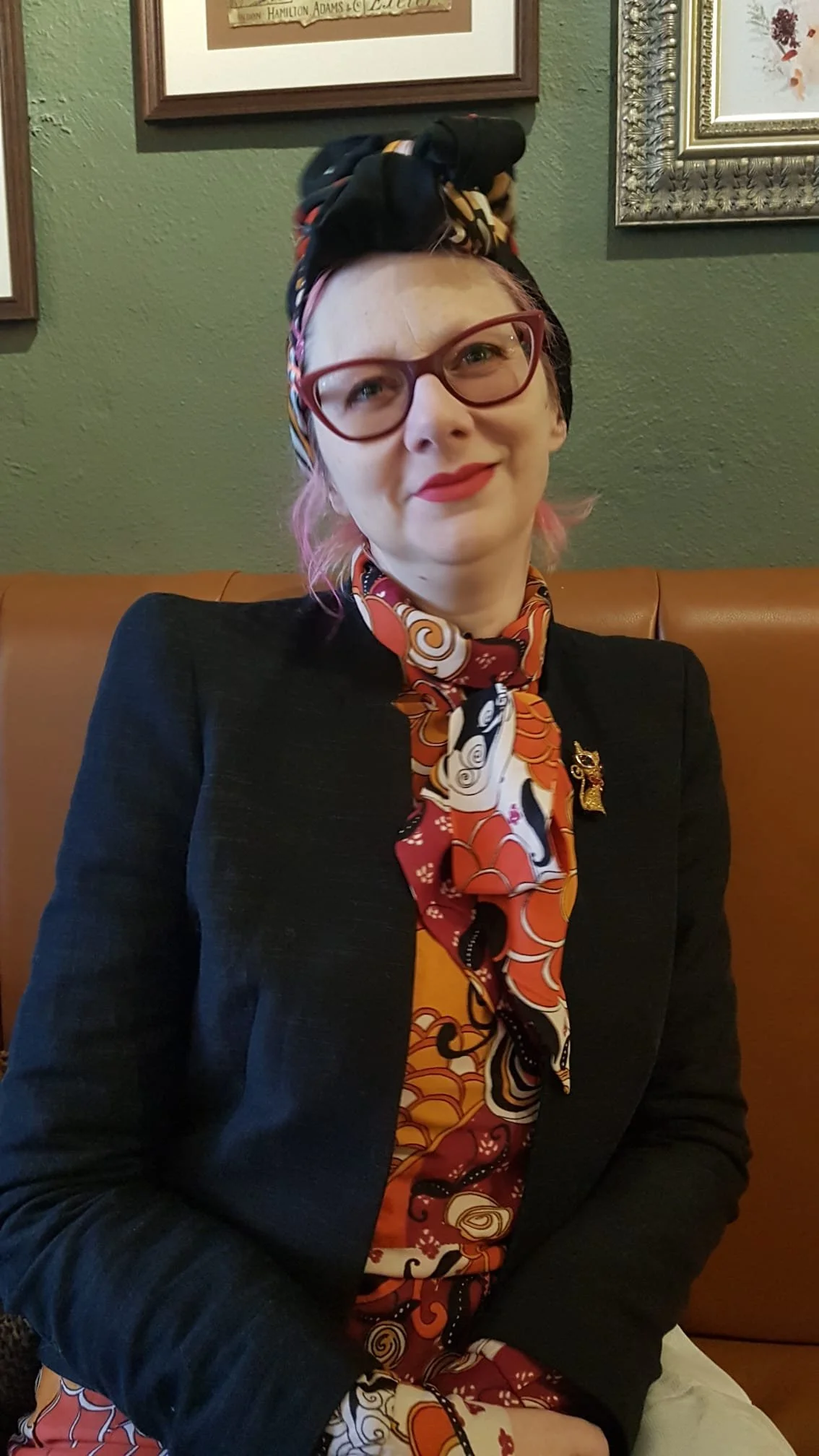
Our thirtieth member of the month is Sue Bamford
UCRF is running a ‘Member of the Month’ feature on this blog, where a member, selected at random from the membership database, is sent five questions to give us all an overview of our members. Our thirtieth participant, Sue Bamford, is an educator and practitioner working at the intersection of repair, material culture, and fashion sustainability, with a focus on mending, hand skills, and more thoughtful relationships to clothing and labour.
—1 How would you sum up your research/practice?
Lead by example. I can't do the 'clean girl' aesthetic; I am messy, colourful, expansive, and my clothes reflect that, with visible patching, embroidery and darns. However, in my work I like to show that that's my choice of a style within a deeply considered practice of remaking, valuing embedded labour and skilled mending. You can follow those principles without the scrappiness. You can also be neat, considered and quiet. My research is concerned with the haptic experience of making and how an embodied understanding of labour and material culture affects ones patterns of use and consumption.
— 2 How do you address fashion and sustainability in your work?
I am Education Officer for a small, Belfast-based charity, Tools for Solidarity. We collect and refurbish donations of hand tools and sewing machines and redistribute them to partner organisations in East Africa to build self-reliance. As we send sewing machines, it makes sense to link the core function of the charity with the wider issues of the fast fashion system, global development and the burden of waste colonialism placed on the Global South. I use the teaching of hand skills as a pathway to empathy and understanding, as well as empowerment.
— 3 What are the conflicts you have encountered around fashion and sustainability in your work?
Poverty. I work with low income groups, and the pricing of ethical consumption is a genuine barrier. There is still a stigma around wearing secondhand and mended clothing, with it seen as a visible marker of poverty rather than a deliberate choice for ethical or political reasons.
I can dress like a mad hippie, because I work in a place that supports and values my wearing dresses made from bedsheets, but that's not the case for everyone. I like to showcase a variety of my mended pieces from the willfully visible to the more subtle 'office appropriate' pieces that look high-end rather than patched over. I actively dislike the phrase 'make do and mend' as it promotes this idea of 'putting up with' mended garments, so my work is visible proof that this isn't the case.
Working with young people there is a social drive towards consumption of fashion at an accelerated pace, to show off your hauls online, and for many a feeling of disgust at buying 'dead people's clothes' secondhand. I'd like to do more work on how to unpick this.
— 4 What do you consider the key sources and cases when it comes to fashion and sustainability?
A few years ago I attended a Mend*rs conference in the Lake District and was hugely inspired by the work of Amy Twigger Holroyd in her knit hacking. It was so precise, the research so meticulous - just the opposite of my own chaotic, anecdotal practice. Her most recent work on a fashion commons is just as interesting and impactful. I'm also using Kate Sekules work in Mend! A refashion Manual and Manifesto, in adult education classes, as it both a why and a how. Often you get one, but not the other, so its a great concise starting point on both the ethics and skills.
— 5 Could you recommend some less-known sources or cases you think should be more widely shared?
In Northern Ireland there is a resurgence of interest in locally produced flax for linen. Most of the hand skill in turning plant into fibre on a large scale has been lost and Mallon LInen has been working with research students to develop smaller scale fibre production. They were highlighted in a recent exhibition https://www.belfastexposed.org/whats-on/the-clean-blue-of-linen/?occurrence=2025-02-06 which presented art and science around linen-making in exciting and engaging ways. Some magical conversations happened as we watched the technicalities of spinning flax fibre happening in the gallery https://mallonlinen.co.uk
Thank you Sue for sharing your work!
