
Dr. Mila Burcikova
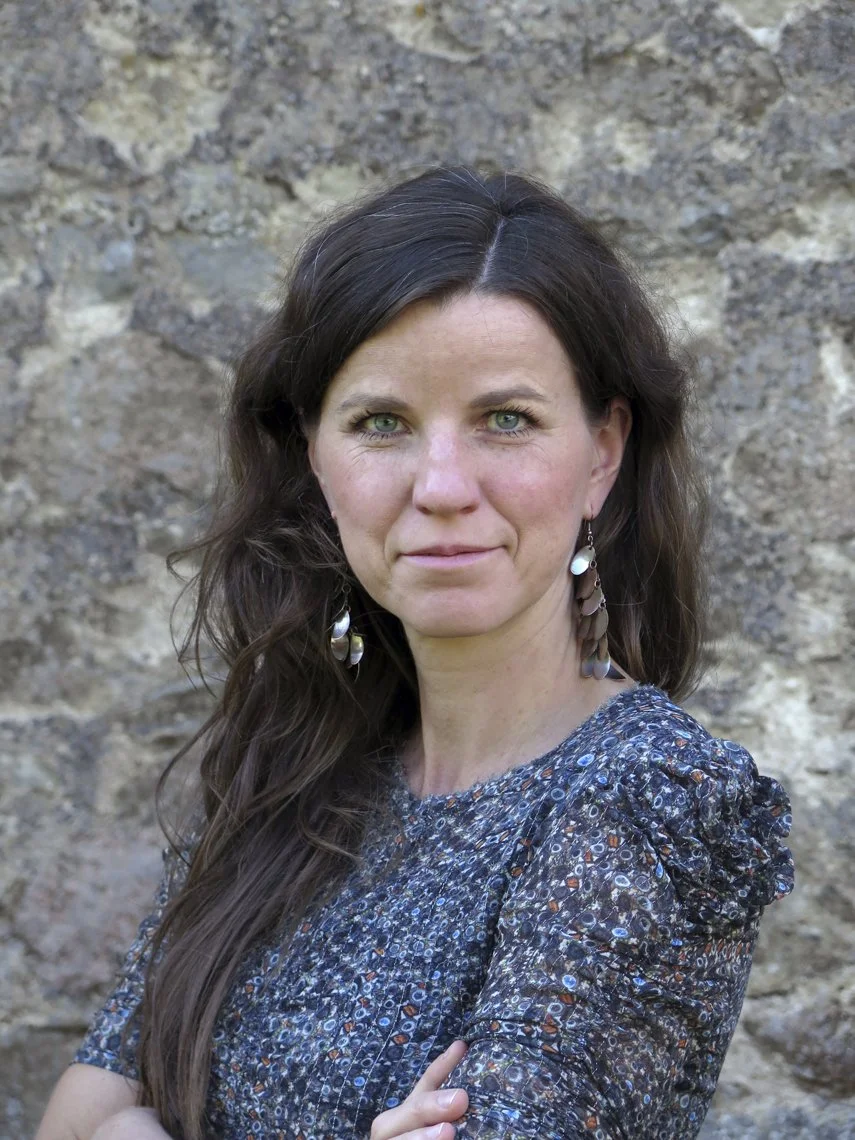
Our thirty-second member of the month is Dr. Mila Burcikova
UCRF is running a ‘Member of the Month’ feature on this blog, where a member, selected at random from the membership database, is sent five questions to give us all an overview of our members. Our thirty-second participant, Dr. Mila Burcikova, is a fashion researcher and practitioner working at the intersection of fashion systems, everyday dress, and sustainability, with a focus on fashion and agriculture, rural fashion systems, and more holistic ways of understanding how fashion is lived, experienced, and valued.
—1 How would you sum up your research/practice?
Over the last few years, my work has focused primarily on the connections between fashion and agriculture, rural fashion systems, and the role of time and cyclical patterns in sustainable living. Alongside this, through my designer-maker practice and ethnographic field research, I have been further developing the concept of mundane fashion, established through my doctoral research on emotional durability of clothing. Mundane Fashion is a metaphor for a holistic understanding of how fashion’s deeply personal, cultural, social, and environmental implications are experienced in our everyday lives.
— 2 How do you address fashion and sustainability in your work?
My work has always been guided by the need to expand the boundaries of fashion and sustainability discourse from narrow technical and material -based lens to deeper questions of values, cultures and systems. Through my research and practice I have always explored and generated alternatives to the current fashion system. There is such wonderful diversity in the ways fashion can be conceived, made, experienced and enjoyed in everyday life. It is a huge shame to reduce all this richness to one overpowering narrative of fashion’s global business.
— 3 What are the conflicts you have encountered around fashion and sustainability in your work?
Like in any other area of life, the endless conflict between short term and long-term goals is also present in the fashion and sustainability space. The ability to hold the complex dynamics between both is extremely rare. We all need to cultivate the skills of listening and addressing everyday concerns without confrontation or moralising, while not losing sight of the bigger, long-term picture.
— 4 What do you consider the key sources and cases when it comes to fashion and sustainability?
I feel the pioneering works of Kate Fletcher and Sandy Black, though written a long time ago now, are still the best introductions to key issues in fashion and sustainability out there (Sustainable Fashion and Textiles, Eco-Chic: The Fashion Paradox– both first published in 2008). I would recommend reading these thoroughly - not just scanning for information (some of which can indeed be outdated by now) - but to understand key concerns, considerations and patterns that are still valid nearly 20 years later. Alice Payne’s Designing Fashion’s Future (2021) is an exceptionally thoughtful conceptualisation of the relationship between fashion-as-culture, fashion-as-industry and fashion-as-change, which I think is crucial for a holistic, systems understanding of fashion and sustainability. I would also recommend keeping up-to-date with the scientific evidence collated in IPCC reports, following the often-intriguing research of the Hot or Cool Institute and expanding geographic perspectives through the rich resources of the Research Collective for Decoloniality and Fashion. Many more important sources are available to each of us locally, wherever we are.
— 5 Could you recommend some less-known sources or cases you think should be more widely shared?
While focusing on what needs changing in fashion, we often forget to profile and celebrate those whose practice has long been grounded in deep respect to people and planet. The Berlin based The Lissome magazine is a beautiful example of a publication that does just that, and I warmly recommend following their on-line and printed stories of those who do fashion differently. The Architecture of Contemplation podcast by Hardeep Kaur is an invitation to resist the temptation to become reactive, creating a space to think/sense deeply before we respond to the urgency that surrounds us everywhere.
Thank you Dr. Mila for sharing your work!
