
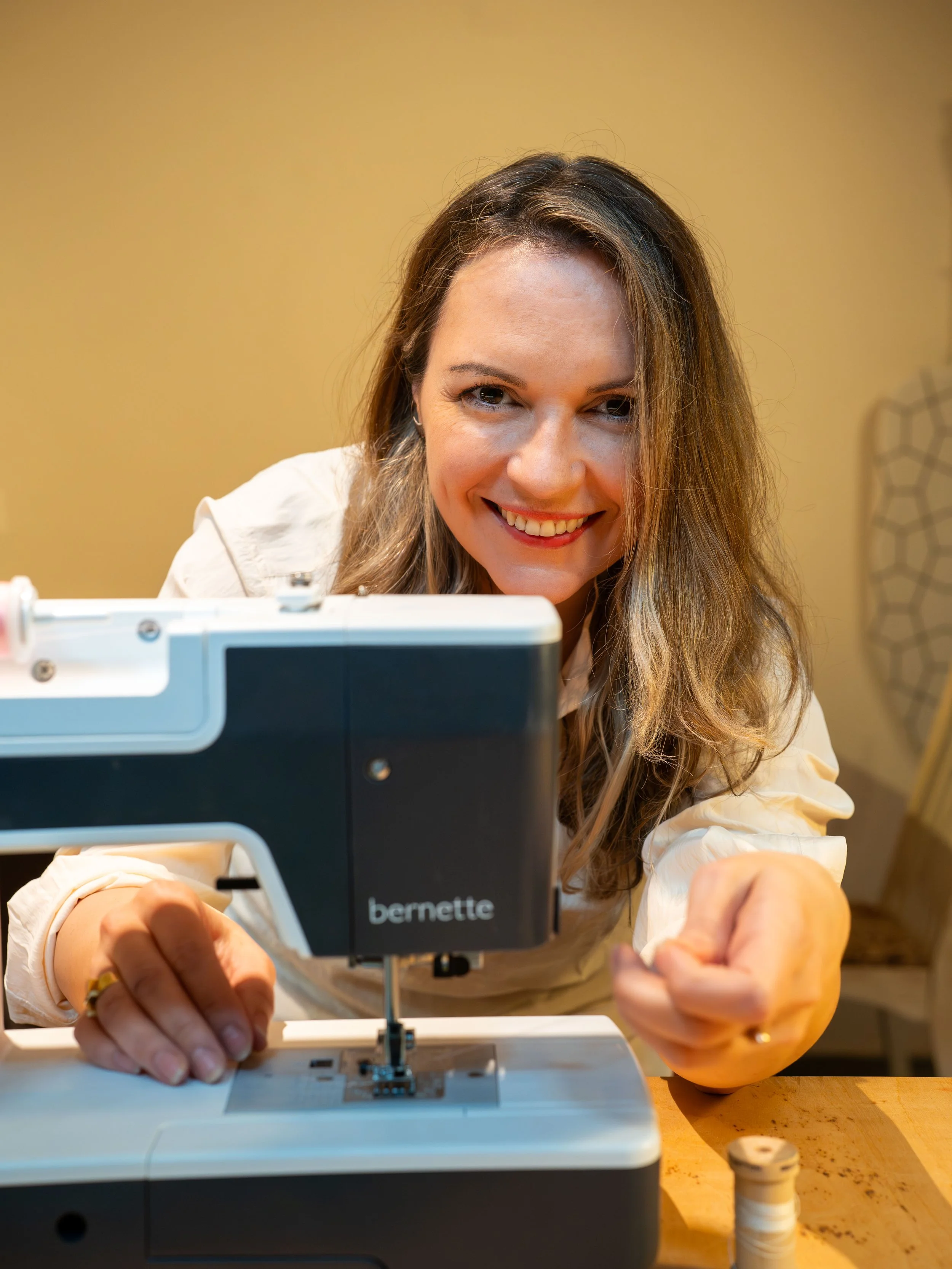
Our thirty-fourth member of the month is Elze van der Hart
UCRF is running a ‘Member of the Month’ feature on this blog, where a member, selected at random from the membership database, is sent five questions to give us all an overview of our members. Our thirty-fourth participant, Elze van der Hart, is a sustainable design consultant, educator, and maker working at the intersection of clothing value, textile knowledge, and conscious fashion practice, with a focus on reconnecting people with what they wear through craftsmanship, material understanding, and care.
—1 How would you sum up your research/practice?
My work explores how we can reconnect people with clothing through knowledge, craftsmanship and conscious decision-making. We have learned to ask where our food comes from, how it is produced and what it is made of. I believe fashion deserves the same curiosity.
After more than a decade working within global fashion brands, I founded NOORD LOOM to bring together industry experience, education and making. By working across sustainable design, material innovation and textile education, I explore how we can bridge the gap between research, industry and everyday practice—helping people better understand, value and ultimately care for what they wear.
— 2 How do you address fashion and sustainability in your work?
My work connects different perspectives within the fashion system. As a consultant, I collaborate with brands, manufacturers and textile innovators to help translate sustainable ideas into products and practices that people can adopt. Through NOORD LOOM, I encourage people to rediscover the value of making, repairing and caring for clothing. Whether working with industry or individuals, my goal is the same: to bring people together around a more thoughtful and beautiful future for fashion.
— 3 What are the conflicts you have encountered around fashion and sustainability in your work?
The fashion industry has fundamentally reshaped society's perception of the value of clothing. One of the greatest conflicts I encounter is that innovation is trying to enter a system built on the wrong assumptions. Sustainable materials are improving rapidly, yet adoption remains slow because the market continues to reward low prices over long-term value.
Over the past few decades, we have been conditioned to believe that clothing can be cheap, when in reality its true costs have simply been shifted elsewhere—to ecosystems, resources and future generations. In many ways, we have been dressing on borrowed time. The challenge is not only to innovate, but to help people rediscover what clothing is truly worth.
— 4 What do you consider the key sources and cases when it comes to fashion and sustainability?
Some of my most valuable learning comes from practice rather than publications. Conversations across the value chain—with farmers, mills, designers, brands and material innovators—continue to shape my perspective.
Beyond fashion, I draw inspiration from behavioural psychology, craftsmanship and systems thinking, which help explain not only how clothing is made, but why we value it. Books that have particularly influenced my thinking include The Craftsman by Richard Sennett, Thinking in Systems by Donella Meadows, and the work of Joanne Entwistle and Otto von Busch, whose research explores clothing as a cultural practice.
— 5 Could you recommend some less-known sources or cases you think should be more widely shared?
I believe we should pay more attention to the knowledge created through practice. Textile mills, fibre innovators, repair studios and small manufacturers hold an extraordinary amount of expertise that rarely appears in publications. I would also like to see more research documenting the journey from material innovation to commercial adoption. Understanding why innovations succeed—or fail—in the real world may be just as valuable as inventing the next generation of sustainable materials.
If I could recommend one source, it would be factory visits. There is no substitute for seeing how fibres become yarns, fabrics and garments, and for talking directly with the people who make them.
Thank you Elze for sharing your work!
